

Best Coffee Beans for Espresso: A Connoisseur’s Guide to the Perfect Shot
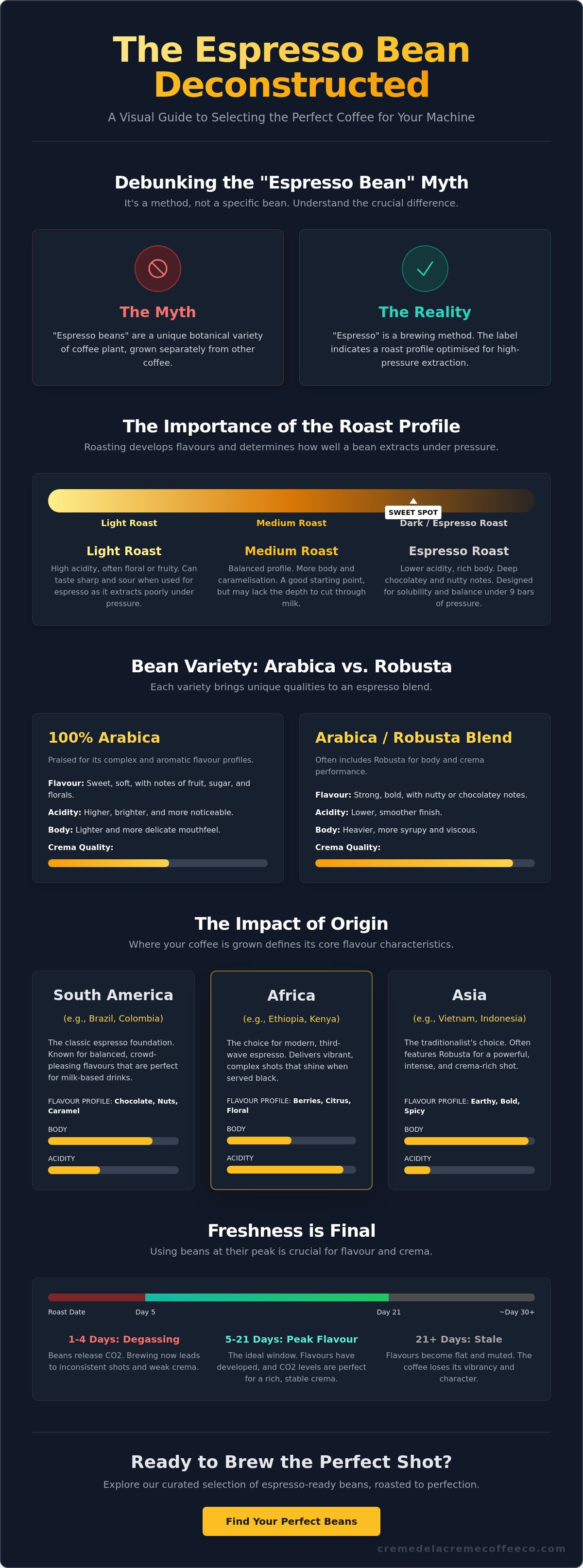
The specific "espresso bean" is actually a myth. Espresso is a brewing method rather than a botanical variety. Finding the best coffee beans for espresso means identifying a roast profile designed to withstand high pressure whilst maintaining a balanced flavour. If you've struggled with shots that taste sour or look thin and watery, you're not alone. Many home baristas find that beans which taste excellent as a filter coffee often fall flat when pulled as a concentrated shot.
We agree that a perfect morning should begin with a syrupy, rich extraction topped with a dense crema. This guide will teach you how to select the ideal beans for your setup, from traditional dark roasts to vibrant single-origins. You'll learn to identify the roast levels and origins that produce a balanced cup that cuts through milk effortlessly. We'll explore the vital differences between robust blends and delicate single-origins so you can choose your next bag with total confidence.
Key Takeaways
- Understand that "espresso" labels describe a specific roast profile rather than a bean variety, allowing you to brew any origin with the correct technique.
- Identify the best coffee beans for espresso by choosing between rich South American chocolate notes and vibrant, citrusy African single-origins.
- Learn to balance consistency and complexity by deciding when to use engineered blends versus experimental single-origin beans for your home setup.
- Discover the "milk test" to ensure your espresso maintains a bold, balanced profile when paired with steamed milk for lattes or flat whites.
- Master the timing of your brew by identifying the ideal degassing window to achieve peak flavour and thick, persistent crema.
What Are Espresso Beans? Debunking the Coffee Label Myth
Walking into a coffee shop, you will often see bags prominently marked "Espresso." It is a common misconception that these beans belong to a different species of plant or grow on a specific type of tree. In reality, any coffee bean can be used to make espresso. To understand what espresso is, you must view it as a preparation method rather than a raw ingredient. The label on the bag is not a botanical classification; it is a recommendation from the roaster. They have selected those specific beans because the roast profile is designed to perform under the intense conditions of a 9-bar extraction.
High-pressure brewing acts like a magnifying glass for flavour. It intensifies every characteristic, especially acidity. If you use a light-roasted bean meant for filter coffee, the result is often sharp or unpleasantly sour. The best coffee beans for espresso are typically roasted longer to increase their solubility. This process ensures the water can easily extract the sugars and oils needed for a balanced, syrupy shot. It is about finding that sweet spot where bitterness and acidity harmonise perfectly.
Roast Profile: Why Espresso Beans Look Different
During the roasting process, beans undergo the Maillard reaction. This chemical change develops complex flavours and encourages sugar caramelisation. Espresso roasts are taken further to create deep, chocolatey notes that stand up to pressure. You might notice a slight oily sheen on darker beans. Whilst this signifies a rich flavour, be cautious with built-in grinders. Excessive surface oil can occasionally clog integrated burrs. Darker roasts also extract faster. This makes it easier to achieve a rich body without needing professional-grade equipment or perfect technique every single time.
Arabica vs Robusta: The Crema Secret
Most specialty enthusiasts prefer 100% Arabica for its sweetness and floral complexity. However, if you are chasing a persistent, thick crema, Robusta plays a vital role. High-quality Robusta beans contain less oil and more CO2, which creates that iconic golden foam. A carefully crafted blend often outperforms a single-origin for traditional home brewing. Blends like The Italian provide the structural integrity required for a reliable daily ritual. They offer a consistent flavour that does not disappear when you add milk, making them a staple for those seeking the best coffee beans for espresso at home.
The Impact of Origin: Choosing Your Espresso Flavour Profile
Origin defines the soul of your shot. Whilst roasting provides the "cook", the origin provides the raw material. High-altitude beans from Ethiopia offer a bright, tea-like clarity. Conversely, lower-altitude crops from Brazil deliver the heavy, syrupy mouthfeel many associate with a classic café experience. Identifying the best coffee beans for espresso often involves experimenting with these distinct regional characteristics to suit your specific palate.
Processing methods also dictate the final texture. Washed coffees tend to be cleaner and more acidic. Natural processing, where the fruit dries on the bean, results in a heavier body and berry-like sweetness. Altitude plays a massive role too. Beans grown above 1,200 metres develop more slowly, becoming denser and more flavourful. Remember that Espresso is not a type of coffee bean; it is a method that demands specific structural qualities from the origin to succeed.
The Colombian and Brazilian Foundations
Colombian beans are widely regarded as the gold standard for home enthusiasts. They offer a reliable balance of mild acidity and caramel sweetness. Brazilian beans act as the perfect anchor for those who dislike "sour" coffee. They are naturally lower in acidity and provide a nutty, cocoa-heavy base. A typical South American espresso blend delivers a smooth, medium-bodied cup with notes of toasted almond and milk chocolate. This reliability makes them a favourite amongst those who want a quality cup without complex dialling-in procedures. If you value consistency, The Colombian offers a dependable start to your morning.
For those who prefer "Modern Espresso", African origins are the primary choice. Ethiopian beans are famous for their floral aromas and citrusy acidity. These beans reward the experienced barista who can manage high acidity without letting the shot become sharp. When pulled correctly, The Ethiopian produces a complex, berry-forward espresso that stands out beautifully as a black coffee.
Vietnamese Beans: The Bold Traditionalist Choice
Many specialty guides dismiss Robusta. This is a mistake for anyone seeking traditional Italian-style crema. Premium Vietnamese beans are redefining this category. They offer an earthy, bold profile with significantly higher caffeine content than Arabica. These beans provide the necessary "punch" to ensure your coffee isn't lost in a large latte or flat white. They create a dense, mahogany-coloured crema that lingers on the tongue. For many, the high caffeine and rich body of these beans make them the best coffee beans for espresso when milk is involved. You can explore this unique profile in The Bold Guide to Authentic Vietnamese Coffee Beans.
Blends vs Single-Origin: Which is Best for Your Machine?
Choosing between a blend and a single-origin is often the first major decision a home barista makes. Blends are purposefully engineered for consistency. Roasters combine different origins to create a specific flavour profile that remains stable, even as individual harvests change throughout the year. This "Seasonal Blend" concept ensures that your morning cup tastes exactly how you expect it to, month after month. It removes the guesswork from your daily ritual.
Many people ask if single-origin coffee is too acidic for espresso. It can be. Because single-origins highlight the unique terroir of a specific farm, they often lean into brighter, fruitier notes. If you're using a light-roast single-origin, the high-pressure extraction can make these flavours overwhelming. However, selecting the right origin and roast level makes them some of the best coffee beans for espresso for those seeking a unique sensory experience that changes with the seasons.
Why We Recommend Blends for Beginners
Blends offer a high level of forgiveness. If your grind size is slightly off or your water temperature fluctuates, a blend is less likely to result in an undrinkable shot. They provide a wider "sweet spot" for extraction. For many, a dark-roasted blend like The Italian: Our Signature Dark-Roasted Espresso Blend represents the quintessential espresso experience. It delivers that familiar, heavy-bodied punch that reminds you of a traditional Roman café. It is reliable, bold, and easy to dial in.
Exploring Single-Origins as an Espresso
Once you've mastered the basics, single-origins offer a rewarding challenge. Look for "Natural" process beans from Ethiopia or Brazil. These usually have more body and sweetness than washed coffees, making them easier to pull as a balanced shot. You may need to adjust your recipe, perhaps opting for a longer yield to tame the acidity of lighter beans. Move to a single-origin when you want to explore specific tasting notes like blueberry, jasmine, or stone fruit. These are the best coffee beans for espresso when you want your coffee to tell a story of a single place and time. They reward precision with unparalleled clarity of flavour.
Matching Your Beans to Your Favourite Drink
Your choice of bean should depend entirely on how you intend to drink it. A delicate, floral bean might be the best coffee beans for espresso when served as a straight shot, but it will likely vanish once you add milk. To ensure your coffee always hits the mark, you should apply the "Milk Test". Ask yourself if the coffee's distinct character can still be tasted after adding 200ml of steamed milk. If the answer is no, your bean choice lacks the necessary punch for that specific drink.
Organising your coffee cupboard by drink type is a practical way to enhance your daily ritual. You might keep a bold, dark roast for your morning wake-up call and a lighter, more nuanced variety for a slow afternoon Americano. This approach ensures you aren't wasting premium single-origins on drinks where their subtle notes are obscured by dairy or sugar.
The Flat White & Latte Framework
Milk fats have a smoothing effect on coffee. They coat the palate and can easily mask the subtle nuances of lighter roasts. To cut through this, you need beans with high solubility and low acidity. Darker roasts with chocolate, caramel, and nutty notes are the ideal partners for dairy. A bold Robusta blend is the secret to a café-quality Flat White because it provides the structural "bite" that persists through the creaminess. Using "The Vietnamese" or "The Italian" ensures your drink remains coffee-forward rather than tasting like warm milk. These blends provide the heavy body required to balance the sweetness of the lactose.
Straight Espresso & Long Blacks
When drinking coffee black, there is nowhere for flaws to hide. You should seek out beans that prioritise natural sweetness and a clean finish. Colombian or Ethiopian varieties are excellent choices for this purpose. You can explore these intricate notes in Ethiopian Coffee: Floral and Fruity Flavor Profiles. Freshness is even more critical when drinking coffee black. Without milk to soften the edges, stale beans will taste hollow and unpleasantly bitter. Look for fruit-forward notes like bergamot, jasmine, or stone fruit to enjoy a truly sophisticated best coffee beans for espresso experience.
Ready to elevate your home barista game? Browse our curated coffee collection and find the perfect match for your favourite brew.
Freshness and Storage: The Final Piece of the Espresso Puzzle
Freshness is the silent partner of extraction. Even the best coffee beans for espresso will fail to perform if they have spent too long on a supermarket shelf. However, there is a common misconception that "fresh" means "roasted this morning". For espresso, patience is a requirement. Freshly roasted beans are packed with carbon dioxide. If you brew them too soon, this gas escapes violently during extraction, creating a "fizzy" crema and preventing the water from properly saturating the grounds. This leads to a shot that tastes hollow and lacks balance.
The ideal window for espresso extraction is the 7 to 21 day "sweet spot". During this time, the beans have degassed sufficiently, allowing the complex flavours and oils to settle. You will notice a richer, more persistent crema and a smoother mouthfeel. To maintain this quality, you must keep your beans in a cool, dark, and airtight environment. Avoid the fridge at all costs. The constant temperature fluctuations and moisture inside a refrigerator cause condensation, which destroys the delicate oils and introduces unwanted food odours to your brew.
Why Pre-Ground Espresso is a Mistake
Buying pre-ground coffee is the quickest way to ruin your morning ritual. The moment coffee is ground, its surface area increases exponentially, leading to rapid oxidation. Within minutes, the vital CO2 required for crema formation vanishes. Espresso also requires extreme precision; you often need to adjust your grind size daily based on the humidity in your kitchen. Pre-ground coffee offers no such flexibility, often resulting in shots that run far too fast or clog your machine entirely. For a deeper look at why texture matters, read our guide on Whole Bean Coffee vs. Ground: Which Stays Fresh Longer?
The Crème de la Crème Freshness Promise
We take pride in our meticulous roasting schedule. We ensure every bag we send arrives at your door just as it enters its peak flavour window. This means you don't have to guess the age of your beans or worry about stale stock. To keep that "just roasted" aroma alive, we recommend using opaque, valved bags or vacuum-sealed canisters. These tools protect your investment from light and oxygen, preserving the sensory rewards of your favourite origin for longer. If you're ready to experience the difference that true freshness makes, browse our freshly roasted espresso collection and start pulling better shots today.
Elevate Your Daily Espresso Ritual
Mastering your home setup starts with understanding that the right bean is a matter of both science and personal taste. You've learned that the label on the bag matters less than the roast profile and the specific degassing window. Whether you prefer the chocolatey foundations of South American crops or the bold punch of a Vietnamese Robusta, the secret lies in choosing beans that suit your favourite drink. This knowledge transforms a simple caffeine fix into a refined sensory experience.
Finding the best coffee beans for espresso shouldn't be a game of trial and error. Our collection is small-batch roasted in the UK and sourced directly from premium estates in Colombia, Vietnam, and Ethiopia. We ensure every bag arrives at its peak, ready for you to pull a balanced, syrupy shot with a thick crema. We even offer free delivery on orders over £25 to make your journey to better coffee even simpler. Find your perfect espresso match in our curated collection.
Take the guesswork out of your morning and start experimenting with flavours that truly resonate with your palate. With the right beans and a little patience, café-quality results are well within your reach. Happy brewing.
Frequently Asked Questions
What are the best coffee beans for espresso UK?
The best coffee beans for espresso UK are those roasted in small batches to ensure peak freshness upon delivery. Look for medium-dark roasts from reputable UK roasters that source from premium estates in Colombia or Brazil. Freshness is paramount for a rich crema. Always check for a "roasted on" date rather than a "best before" date to ensure you're getting the highest quality possible for your daily ritual.
Can I use regular coffee beans in an espresso machine?
You can use any coffee bean in an espresso machine, as espresso is a brewing method rather than a bean variety. However, "espresso" labels usually indicate a roast profile designed for high pressure. These beans are roasted longer to increase solubility, allowing for a balanced extraction in a short time. Using light filter roasts often results in a sharp, thin shot that most home machines struggle to process effectively.
Why does my espresso taste sour even with good beans?
Sourness is usually a sign of under-extraction or using a roast that is too light for your equipment. If your water temperature is too low or your grind is too coarse, the water passes through too quickly to extract the sugars. Try using a finer grind size or switching to a darker roast profile. This helps you achieve a more balanced, sweeter result that avoids that unpleasant, biting acidity.
Is Arabica or Robusta better for espresso?
Most specialty enthusiasts prefer Arabica for its sweetness and complex aromatic notes. However, high-quality Robusta is excellent for adding a woody depth and creating a thick, persistent crema. A blend of both often provides the most reliable and syrupy home extraction. It offers the flavour complexity of Arabica whilst maintaining the structural body and rich crema that many traditional espresso drinkers expect from their morning cup.
How long do espresso beans stay fresh after roasting?
Espresso beans reach their peak flavour between 7 and 21 days after the roasting date. This allows the beans to degas, preventing the "fizzy" crema and hollow taste found in coffee that is too fresh. After three weeks, the delicate oils begin to oxidise. The flavour profile starts to flatten, losing the vibrant character and syrupy mouthfeel that defines a truly great shot of home-brewed espresso.
What is the best roast level for espresso?
A medium-dark to dark roast is the best roast level for espresso. These levels ensure the beans are porous enough for quick, high-pressure extraction. They also develop the caramelised sugars and chocolate notes that cut through milk effectively. Many consider these the best coffee beans for espresso because they offer a wider "sweet spot", making it much easier to achieve a balanced and delicious shot every morning.
Should I buy whole bean or ground coffee for my espresso machine?
You should always buy whole bean coffee to maintain the necessary quality for espresso. Pre-ground coffee loses its vital CO2 and aromatic oils within minutes of being crushed. Since espresso requires tiny grind adjustments based on daily humidity and bean age, using whole beans and a quality burr grinder is the only way to achieve consistent results. It ensures your coffee remains fresh and full of flavour for longer.
What is the difference between an espresso blend and a single-origin?
An espresso blend is engineered for consistency by combining different origins to create a stable flavour profile. A single-origin coffee comes from one specific farm, highlighting unique characteristics like floral or citrusy notes. Blends are generally more forgiving for beginners because they provide a balanced foundation. Single-origins are a "wild card" that reward experienced baristas with a unique sensory experience that changes with every harvest and region.