

Choosing the Best Coffee Blends: A Complete Buyer’s Guide for 2026
Single-origin beans often steal the spotlight, but a masterfully crafted coffee blend is the true soul of a roaster’s craft. Whilst individual origins offer unique stories, coffee blends provide the balance and reliability that define a perfect morning ritual. You've likely experienced the frustration of a speciality bag that feels too acidic or a flavour that shifts inconsistently between every purchase. It's exhausting trying to guess which beans will actually complement your splash of milk instead of clashing with it.
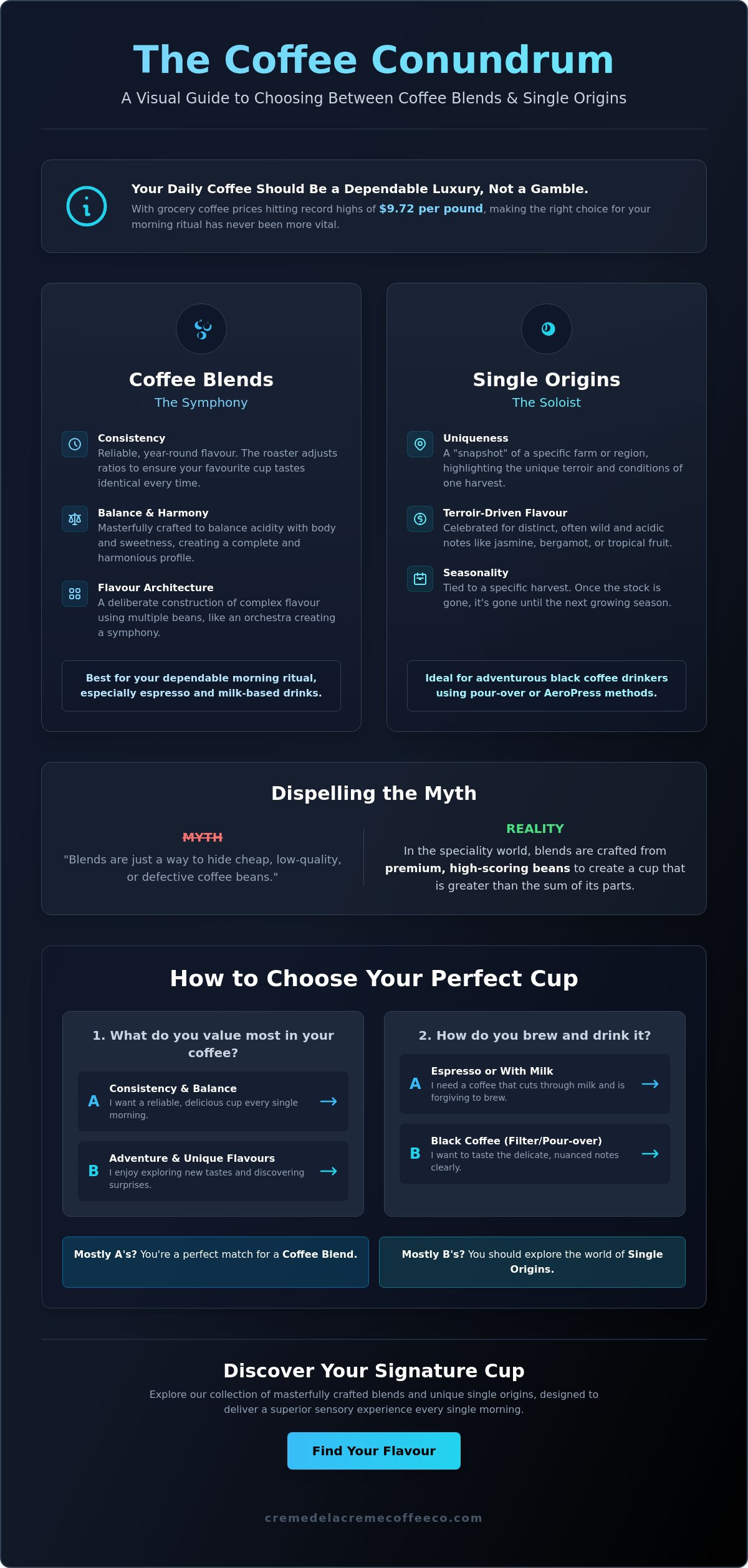
We agree that your daily coffee should be a dependable luxury, not a chemistry experiment. With grocery coffee prices hitting record highs of $9.72 per pound in April 2026, making the right choice has never been more vital. This guide will help you identify the profiles that suit your specific brewing method, from deep espresso roasts to vibrant morning cups. We'll examine the roaster's art, the impact of new sustainability regulations like the EUDR, and how to select a signature cup that delivers a superior sensory experience every single morning.
Key Takeaways
- Understand the concept of "flavour architecture" and how roasters use specific bean combinations to build a more complex, reliable cup.
- Learn to distinguish between the "snapshot" experience of a single origin and the "symphony" of flavours found in a curated mix.
- Categorise your palate into three distinct pillars to find your favourite coffee blends, ranging from bold and traditional to bright and modern.
- Optimise your home brewing by learning why specific blends require lower water temperatures and tailored methods to achieve maximum flavour.
- Discover signature options like "The Italian", crafted to provide a consistent, high-end espresso experience that cuts through milk perfectly.
What Are Coffee Blends and Why Do Roasters Create Them?
A coffee blend is a curated mix of beans from various origins, regions, or even different altitudes within the same country. Whilst a single-origin bean offers a specific snapshot of a single farm, blends are designed to tell a broader story. Roasters act as architects; they use the unique traits of different beans to build a complete profile. This process, often called "flavour architecture," allows for a level of precision and balance that nature alone rarely provides in a single harvest.
Consistency is the heartbeat of any successful roastery. Coffee is a seasonal crop. A harvest from Colombia in January will naturally taste different from one in July. By meticulously adjusting the ratios within their blends, roasters ensure that your favourite morning cup remains identical every time you open a new bag. They balance the bright acidity of one bean with the heavy body and sweetness of another to create a reliable, year-round experience. This makes the roaster a vital curator of your daily ritual.
The Purpose of the Blend: Balance vs. Complexity
Successful blending is about harmony. A bean with high acidity might feel too sharp on its own. However, it becomes vibrant and exciting when paired with a full-bodied, chocolatey component. This synergy creates a "signature" taste that defines a roaster's identity. It's about creating a cup that feels complete. Some roasters prefer pre-roast blending, where green beans are mixed before entering the drum. Others choose post-roast blending. This involves roasting each component separately to its own perfection before mixing. This second method often results in more distinct, layered complexity in the final brew.
Dispelling the Myth: Are Blends Just "Cheap" Coffee?
Historically, commercial coffee blends were used to mask low-quality beans or hide defects. This created a lingering myth that they are inferior to single origins. In the speciality world, the opposite is true. Roasters use premium, high-scoring beans to create something greater than the sum of its parts. The final character is defined during the roasting process. This is where the Maillard reaction transforms sugars and amino acids into complex aromatic compounds. Whether it's a medium or dark roast, the goal is always quality and intentionality. Quality matters. A well-crafted blend is a testament to the roaster's skill and dedication to your satisfaction.
Coffee Blends vs Single Origins: Which Should You Choose?
Choosing between a single origin and a blend is like picking between a solo acoustic set and a full orchestra. A single origin provides a "snapshot" of a specific farm or region. It highlights the unique terroir and the specific weather conditions of that year's harvest. In contrast, coffee blends are a combination of beans that create a "symphony" of balanced flavours. Professional roasters use this method to achieve a level of complexity and mouthfeel that a single bean often lacks on its own.
Your choice depends on your personality as a coffee drinker. If you're an adventurous explorer who enjoys tasting the wild, acidic notes of a specific harvest, you'll likely gravitate towards single origins. If you're a consistency seeker who values a dependable, high-quality morning ritual, blends are your best ally. They provide a reliable flavour profile regardless of the month or year. This stability is why espresso blends remain the industry standard for milk-based drinks; they possess the heavy body and deep sweetness to cut through dairy without losing their character.
When to Reach for a Single Origin
Single origins are celebrated for their distinct, terroir-driven notes. You might taste delicate hints of jasmine, bergamot, or tropical fruit in a bag like The Ethiopian. These beans are best enjoyed as black coffee using pour-over or Aeropress methods. This allows the subtle nuances to shine through. It's vital to remember their seasonal nature. Because they come from one specific harvest, once the stock is gone, it's gone until the next growing season. Whilst grocery coffee prices rose 29% between 2025 and 2026, the speciality market stayed stable, making these unique single origins a high-value treat for the discerning palate.
Why Blends Rule the Morning Ritual
Most of us crave comfort in the morning. We want the rich, familiar tastes of chocolate, roasted nuts, and caramel. This is where blends truly excel. They are specifically engineered to be more forgiving for home baristas during extraction. If your water temperature or grind size isn't perfectly precise, a blend is less likely to taste "sour" than a light-roasted single origin. You get a consistent, premium experience every single day. If you want to simplify your routine, you might consider setting up a coffee subscription to ensure your favourite beans never run out.
The reliability of a core blend means you don't have to adjust your grinder settings every week. It's about refined simplicity. You can trust that the bag you buy today will taste just as excellent as the one you bought six months ago. For those who enjoy a traditional dark roast with a thick crema, exploring signature blends is the most direct path to a perfect cup.
Decoding Flavour Profiles: Finding Your Favourite Blend
Identifying your signature cup starts with categorising blends into three main pillars: Dark & Bold, Balanced & Sweet, and Bright & Modern. Each category serves a specific mood and brewing method. Roast levels dictate the final outcome. A dark roast prioritises the caramelisation of sugars for a smoky finish. A medium roast allows the bean's inherent origin to remain the star. Understanding this interaction helps you move past the confusion of "sour" speciality bags and towards a cup you actually enjoy.
Use this checklist to identify your personal sensory preferences:
- Do you add milk? If yes, look for a heavy body and low acidity to ensure the coffee flavour isn't drowned out.
- Do you prefer "comfort" over "adventure"? Opt for profiles that highlight chocolate, caramel, and toasted nuts.
- Is body more important than brightness? Darker roasts provide a thicker mouthfeel and a lingering finish.
The bean species also affects the result. Arabica beans offer delicate sweetness and complex aromas. Robusta beans provide a higher caffeine "kick" and a dense, lasting crema. Traditional styles like The Vietnamese utilise this balance to create a powerful, textured experience. With speciality coffee prices averaging $32.75 per pound in early 2026, selecting a profile that aligns with your palate is a vital step in maintaining a cost-effective yet premium ritual.
The Italian Style: Dark, Rich, and Traditional
Traditional espresso lovers usually seek low acidity and a heavy, velvety body. This style features smoky, toasted notes that remain distinct amongst steamed milk. These are widely considered the best coffee beans for espresso because they offer a punchy, reliable foundation for lattes and flat whites. Our flagship choice, The Italian, is the quintessential example. It delivers a nostalgic, chocolate-rich profile. It's bold. It's consistent. It's the soul of the traditional morning ritual.
Modern Blends: Fruit-Forward and Complex
Modern blends take a different approach. They often combine a bright, floral component from Ethiopia with a structured, nutty base from Brazil or Colombia. This creates a complex cup. It retains speciality traits without the volatility often found in single origins. When reading roaster notes, look for descriptors like "Stone Fruit" or "Bergamot" if you want a vibrant start to your day. If you prefer depth, look for "Toffee" or "Cocoa." These lighter-roasted options are perfect for black coffee drinkers. They offer a sophisticated sensory experience that remains approachable and easy to brew every single day.
How to Brew Your Blends for Maximum Flavour
Your brewing equipment is the final filter for the roaster’s craft. Choosing the right blends for your specific machine ensures you extract the intended flavour profile every time. Unlike light-roasted single origins that often require boiling water to unlock floral notes, many signature coffee blends perform better at slightly lower temperatures. Aim for 90°C to 92°C. This prevents over-extraction and ensures the chocolatey, nutty base remains sweet rather than bitter. It's a simple adjustment that makes a profound difference to your morning cup.
Milk compatibility is another vital factor. Whether you prefer dairy or plant-based alternatives like oat or almond, the fat content interacts with the coffee's acidity. A well-structured blend is designed to cut through milk. It maintains its character whilst enhancing the natural sweetness of the lactose or grain. If you drink your coffee black, you might prefer a medium-roasted profile. If you add milk, a darker, more robust profile is usually the superior choice. Matching your grind size to your equipment is the final step. Fine for espresso, medium for drip, and coarse for immersion methods.
To further customise your brew with healthy, clean-label additions, you can learn more about Leaner Creamer and their range of coffee creamers and syrups.
The Espresso Method: Dialling in Your Signature Shot
Achieving a balanced extraction with a multi-origin blend requires a methodical approach. Start with a standard 1:2 ratio, such as 18g of coffee to 36g of liquid espresso. "The Italian" blend is particularly famous for its superior crema. This is due to its specific bean composition, which provides the oils and structure needed for a thick, velvety head. If the shot tastes sharp or thin, try a finer grind to slow down the water. If it feels unpleasantly ashy or bitter, coarsen the grind. Small adjustments lead to professional results.
Cafetiere and Filter: Bringing Out the Balance
Medium-roasted blends are often the "Goldilocks" choice for French Press and filter brewing. They offer enough body to feel substantial without the intense smokiness of a dark roast. For a cafetiere, a coarse grind is essential. It prevents the water from over-extracting the darker components, which can lead to a muddy taste. When batch brewing, ensure you rinse your paper filter first to remove any papery flavour. This keeps the profile clean and allows the roaster's intended balance to shine. If you want to experience this balance for yourself, browse our collection of signature blends to find your perfect match.
Consistency in your technique is just as important as the beans you buy. Use a scale to weigh your coffee and water. This removes the guesswork and ensures that your favourite ritual is repeatable. By mastering these simple variables, you transform a standard morning drink into a premium sensory experience.
Discover the Crème de la Crème Signature Blends Collection
Finding the right coffee is a personal journey. Our collection of coffee blends is meticulously designed to cater to every palate, from the traditionalist to the modern explorer. We understand that your morning ritual is sacred. It requires more than just caffeine; it requires a sensory experience you can rely on. By balancing the bold energy of Robusta with the refined sweetness of Arabica, we've created a range that excels across all brewing methods.
Versatility is at the heart of our curation. You might prefer the high-energy "kick" of The Vietnamese for those early starts. Alternatively, you might lean towards the smooth, nutty profiles of The Brazilian or The Colombian for a relaxed afternoon. Every bag in our collection represents a specific chapter of the roaster's craft. We focus on the connection between the product and your daily routine, ensuring every sip feels like a dependable luxury.
To complement your luxury coffee experience in a professional setting, theceocreative.com offers a range of custom branding solutions and office supplies that reflect a similar commitment to quality.
A Coffee Subscription is the most efficient way to maintain this ritual. It removes the friction of reordering. Your favourite blends arrive at your door exactly when you need them. It's consistent. It's effortless. It's the ultimate way to ensure you never face a morning without a premium cup. You simply choose your profile, and we handle the rest.
Spotlight on "The Italian": Our Signature Roast
"The Italian" remains the undisputed flagship of our collection. It's a bold, chocolatey masterpiece designed specifically to cut through milk with ease. For home espresso enthusiasts, it's the most popular choice. It provides the heavy body and low acidity needed to create a robust foundation for flat whites or lattes. The crema is dense and persistent. It delivers a nostalgic, rich profile that reminds you why you fell in love with coffee in the first place. Use it as your go-to for a morning cappuccino or a punchy afternoon macchiato.
Why Order Your Blends from Us?
We prioritise quality over volume. Every batch is roasted in small quantities to guarantee maximum freshness upon delivery. We deliver nationwide. This ensures that the beans you receive are at their peak flavour window. Our expert curation involves testing every profile across multiple brewing methods. We check for consistency. We check for balance. We check for soul.
You don't need to settle for the record-high prices of grocery store coffee, which hit $9.72 per pound in April 2026. Instead, invest in a curated experience that offers genuine value. Our direct-to-door convenience allows you to skip the supermarket aisles and enjoy boutique quality at home. Browse the full range of blends today. Find the profile that speaks to your routine. Elevate your daily ritual with a brand that cares as much about the details as you do.
Elevate Your Daily Coffee Ritual
Finding the right balance in your cup means moving beyond the unpredictability of seasonal harvests. We've explored how roasters use flavour architecture to create a consistent, premium experience that cuts through milk perfectly. Whether you prefer the dark, chocolatey notes of a traditional espresso or a bright, fruit-forward profile, your morning routine deserves a signature taste you can rely on every single day.
Our collection is small-batch roasted to ensure peak freshness upon arrival. We provide expertly curated flavour profiles specifically designed for home baristas seeking professional results. With reliable nationwide UK delivery, your next favourite cup is never far away. It's time to stop settling for inconsistent grocery store options and start enjoying the roaster's craft as it was intended. Our blends are designed to deliver excellence with every pour.
Explore our full range of masterfully crafted coffee blends
We're here to guide you toward a superior sensory experience. Happy brewing.
Frequently Asked Questions
What is the difference between a coffee blend and a single origin?
A single origin coffee comes from one specific farm or region, whilst blends are curated combinations of beans from multiple locations. Roasters create these mixes to achieve a specific, repeatable flavour profile that remains consistent throughout the year. This method allows for a balanced cup where the strengths of one bean complement the characteristics of another. It's about creating a reliable signature taste that isn't dependent on a single harvest.
Are coffee blends better for espresso than single origins?
Blends are generally preferred for espresso because they offer the structural stability needed for high-pressure extraction. They produce a more reliable crema and a balanced acidity that doesn't overwhelm the palate. Whilst single origins can offer unique highlights, they often lack the heavy body required to stand up to milk. A well-constructed mix ensures your espresso shot remains consistent and delicious every time you pull it.
Do coffee blends stay fresh longer than single origin beans?
Freshness is determined by the roast date and storage conditions rather than whether the coffee is a single origin or part of various blends. All coffee should be consumed within four to six weeks of roasting for the best sensory experience. Oxygen is the enemy of flavour. Storing your beans in an airtight container in a cool, dark place is the best way to preserve the delicate oils that define the coffee's character.
Which coffee blend is best for drinking with milk or cream?
Darker, more traditional profiles like The Italian or high-energy options like The Vietnamese are the best choices for milk-based drinks. These beans possess the heavy body and chocolatey sweetness required to cut through dairy or plant-based alternatives. Lighter-roasted single origins can sometimes taste thin or overly acidic when combined with milk. A robust profile ensures the coffee's character remains the star of your latte or flat white.
Can I use a dark-roasted blend in a pour-over or V60?
You can certainly use dark roasts for filter brewing, provided you adjust your technique to avoid over-extraction. Try using a slightly coarser grind and lower your water temperature to around 90°C. This helps to highlight the rich, toasted notes without pulling out the harsh bitterness that can occur with boiling water. It results in a heavy, sweet cup that offers a different perspective on the traditional filter experience.
Why does my coffee blend taste different every time I brew it?
Inconsistency usually points to variations in your brewing technique rather than the beans themselves. If you don't use a scale, even a slight change in the amount of coffee or water can alter the strength and taste. Water temperature and grind size also play critical roles. Small adjustments to your grinder or using filtered water can help you achieve the consistent, premium experience that professional roasters intended for their products.
Are there any decaf coffee blends available?
Whilst our signature range currently focuses on caffeinated origins, decaffeinated options are common in the wider speciality market. Look for beans processed using the Swiss Water Method, which removes caffeine without using harsh chemicals. This ensures the bean's natural flavour remains intact. If you require a decaf option, always verify the roast date to ensure the same level of freshness as our standard range.
What makes a "speciality" coffee blend different from supermarket coffee?
Speciality coffee is defined by its quality score, typically 80 points or higher on a 100-point scale. Unlike mass-produced supermarket options, these premium blends are roasted in small batches to preserve delicate oils and sugars. Supermarket coffee is often roasted in bulk and stored for months, leading to a flat, bitter taste. Choosing speciality ensures you are drinking beans that were sourced with care and roasted for flavour rather than shelf life.