

Coffee Roast Levels Explained: A Complete Guide to Finding Your Favourite Flavour
The most expensive bag of specialty coffee in the UK will still taste "off" if the roast level doesn't match your personal palate. It's a common frustration; you invest in premium beans only to find the result is either unpleasantly sour or far too bitter for your morning ritual. Having coffee roast levels explained clearly is the essential first step to ensuring every cup you brew at home is a success. Many drinkers mistakenly assume that a darker roast automatically means more caffeine, or they struggle to know which beans suit their specific espresso machine or cafetière.
You deserve a morning coffee that feels like a reward rather than a gamble. We'll help you master the nuances of the roasting process so you can choose the perfect beans for your taste buds every single time. This guide explores the delicate tug-of-war between a bean's natural origin and the roaster's fire. We'll break down the flavour profiles of light, medium, and dark roasts; this helps you decide whether you prefer the fruity notes of The Ethiopian or the bold, chocolatey depth of The Italian. By the end, you'll be able to read any label with confidence and select your next coffee subscription with ease.
Key Takeaways
- Discover how heat and the Maillard reaction transform flavourless seeds into complex beans with distinct aromatic profiles.
- Get coffee roast levels explained to help you identify the specific characteristics of light, medium, and dark roasts.
- Separate fact from fiction by understanding the true relationship between roast depth, acidity, and actual caffeine content.
- Master the art of matching beans to your equipment, whether you are using a V60 pour-over or a traditional espresso machine.
- Learn how to interpret coffee labels with precision to select the ideal flavour profile for your daily ritual.
The Science of the Roast: How Heat Transforms the Bean
Before your morning cup is brewed, the coffee bean begins its journey as a dense, green seed. It's essentially flavourless at this stage. It's as hard as a pebble and smells more like freshly cut grass than the rich aroma you recognise. Roasting is the transformative process that unlocks the complex flavours hidden within. Having The Science of the Roast explained helps you understand why some beans taste like bright citrus whilst others remind you of indulgent dark chocolate. Heat is the catalyst that turns a raw agricultural product into a premium sensory experience.
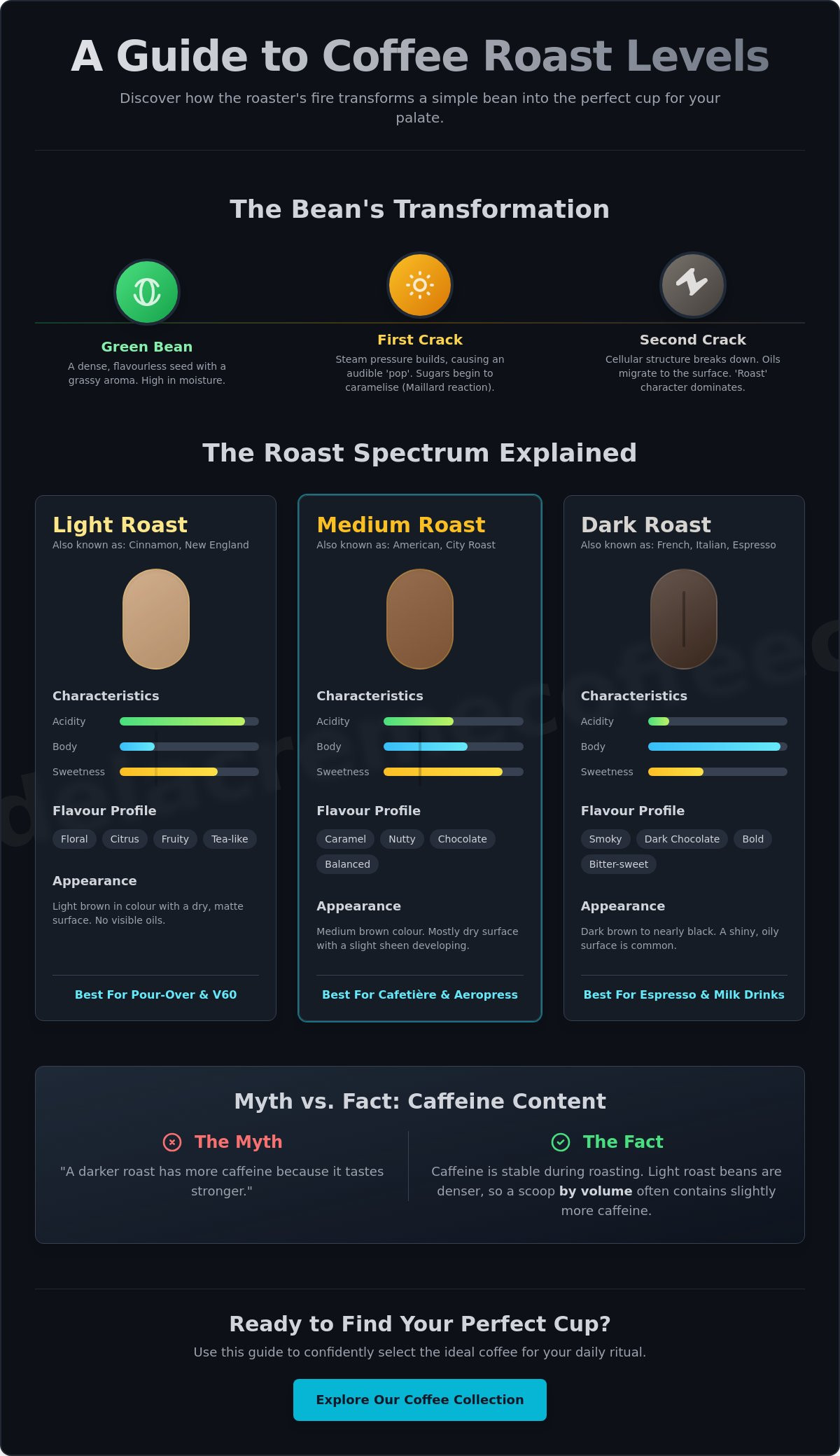
Roasting involves a delicate tug-of-war between the bean's origin and the roaster's fire. Physical milestones define the process. "First crack" occurs when steam pressure builds inside the bean, causing it to audibly pop and expand. This is where most light roasts finish. If the heat continues, "second crack" happens as the cellular structure breaks down further. This is the hallmark of a dark roast, where the character of the roast begins to overshadow the bean's original terroir. The longer the bean stays in the drum, the more its natural acidity fades, replaced by a developing bitterness and "roastiness."
The Maillard Reaction and Caramelisation
Heat application triggers the Maillard reaction. This chemical interaction between amino acids and reducing sugars creates hundreds of flavour compounds. Think of it like toasting bread. Initially, the bean loses its moisture and turns a pale yellow. As the temperature rises, those bready aromas evolve into complex sweetness. It's a precise balance. Too little heat leaves the coffee tasting metallic or sour. Too much heat and you lose the delicate floral notes of beans like The Ethiopian. Eventually, caramelisation takes over, turning sugars into the deep, bitter-sweet notes found in a Coffee Subscription.
Physical Changes: Colour, Oil, and Size
Beans grow significantly whilst they roast. They can expand by up to 50% in size but lose nearly 20% of their weight as water evaporates. As the internal structure becomes more brittle, surface oils begin to emerge. This is a key part of having darker coffee roast levels explained. These oils are a visual indicator that the sugars have been pushed to the surface and are beginning to carbonise. This transition creates the shiny, dark appearance typical of an espresso roast, shifting the profile from the bean's natural acidity to a heavy, textured body.
The Roast Spectrum: Light, Medium, and Dark Explained
Coffee roasting is a precise craft where seconds can change the entire profile of a bean. Whilst many people choose their beans based on the name of the country, the roast level is what truly dictates the daily experience in your cup. We categorise these levels into three primary bands based on the internal temperature the beans reach. This guide to The Roast Spectrum: Light, Medium, and Dark Explained helps you navigate these choices with confidence. Understanding how the heat interacts with the bean's sugars is the secret to having coffee roast levels explained in a way that actually improves your morning ritual.
To help you decide at a glance, here is how the primary roast levels compare across key flavour attributes:
- Light Roast: High acidity; light body; vibrant floral and citrus notes. Best for pour-over and V60.
- Medium Roast: Balanced acidity; medium body; caramel and nutty notes. Best for cafetière and aeropress.
- Dark Roast: Low acidity; heavy body; smoky and dark chocolate notes. Best for espresso and milk-based drinks.
Light Roast: The Purist's Choice
Light roasts are removed from the drum just after the "first crack." They are light brown in colour and have a dry surface because the internal oils haven't been pushed out by the heat. These roasts are popular amongst specialty coffee enthusiasts because they preserve the "terroir." This means you taste the unique characteristics of the soil and climate where the bean grew. You'll often find these labelled as Cinnamon or New England roasts. They offer a tea-like delicacy with bright, crisp acidity. Our The Ethiopian beans are a perfect example of this refined style.
Medium and Dark: Body and Intensity
Medium roasts are the quintessential crowd-pleasers. They strike a perfect harmony between acidity and body, developing a rich sweetness without losing the bean's natural character. You might know these as City or American roasts. They are the ideal choice for those who enjoy a smooth, reliable cup with notes of milk chocolate and toasted nuts. If you prefer a balanced start to your day, The Colombian offers a versatile medium profile that works beautifully in almost any brewer.
Dark roasts, including The Italian or French roasts, are all about intensity. These beans are roasted until the "second crack" or beyond, resulting in a shiny, oily surface. The flavour shifts away from the bean's origin and towards the influence of the roaster's fire. You'll experience a heavy mouthfeel with bold, smoky, and spicy notes. Acidity is minimal, making these roasts the traditional choice for a powerful espresso that can cut through milk.
The intense, smoky notes of a dark roast also make it an ideal partner for other refined pleasures; many enthusiasts find that these bold profiles perfectly complement a high-quality selection from Gotham Cigars.
Caffeine and Acidity: Debunking Common Roast Level Myths
Many drinkers equate a bold, smoky flavour with a higher caffeine kick. It's a logical assumption, but it's scientifically inaccurate. When having coffee roast levels explained, the distinction between sensory strength and chemical strength is vital. The "strength" you taste in a dark roast is actually the intensity of the roasting process, not the stimulant content. Caffeine is an incredibly stable molecule. It survives the heat of the roasting drum almost entirely intact. Whether you choose a light or dark roast, the actual caffeine content remains remarkably similar on a bean-by-bean basis.
Acidity is another area where terminology often causes confusion. In the coffee world, acidity refers to a bright, crisp quality on the tongue; think of the zest of a lemon or the snap of a green apple. It is a prized attribute in specialty coffee, particularly in The Ethiopian or The Colombian. This is different from the pH level of the liquid. Whilst light roasts have a higher perceived acidity, the actual pH difference between light and dark roasts is minimal. If you find coffee upsets your stomach, the "brightness" of a light roast might be the culprit, even if the chemical acid levels are similar to darker options.
The Caffeine Paradox: Volume vs Weight
The myth that dark roast has more caffeine persists because of how we measure our coffee at home. As beans roast, they lose water and expand in size. A dark-roasted bean is larger but much lighter and less dense than a light-roasted bean. This creates a paradox in your kitchen:
- Measuring by scoop: You'll fit fewer dark-roasted beans into a scoop because they are physically larger. This results in a cup with less caffeine.
- Measuring by weight: You'll need more dark-roasted beans to reach 20g on a scale. This results in a cup with slightly more caffeine.
Precision is key for a consistent morning ritual. We recommend using a digital scale to ensure your Coffee Subscription delivers the exact experience you expect every single day.
Understanding Perceived Acidity
Roasting acts as a volume knob for acidity. The longer a bean stays in the heat, the more its organic acids, such as chlorogenic acid, break down. This is why The Italian or The Vietnamese roasts feel smoother and "flatter" on the palate. They trade the vibrant, fruit-like acidity of a light roast for deep, chocolatey bitterness. If you prefer a heavy mouthfeel without any sharp or sour notes, a dark roast is your best ally. Conversely, those who enjoy a tea-like, refreshing finish should gravitate towards lighter profiles where these delicate acids are preserved.
Choosing Your Roast: Matching Beans to Your Brewing Method
Your equipment is a tool. Use it correctly to unlock the best possible flavour from your beans. Many drinkers assume that any bean works in any machine, but the reality is more nuanced. The brewing method you choose dictates how much time the water has to pull flavours from the grounds. This is why having coffee roast levels explained in the context of your specific kit is so important. A bean that tastes vibrant and floral in a filter brewer might taste unpleasantly sharp in an espresso machine.
Matching the roast to the method ensures you don't waste premium beans. Light roasts are dense and require more energy to extract, whilst dark roasts are porous and give up their flavours much faster. If you use a quick extraction method like espresso with a light roast, the water doesn't have enough time to pull out the sugars, often resulting in a sour cup. Conversely, using a dark roast in a slow immersion method like a cafetière can sometimes lead to an overly bitter, smoky profile if left too long.
Filter and Pour-Over: Highlighting Clarity
Filter methods like the V60, Chemex, or a standard drip machine rely on gravity and paper filters. These are designed to produce a clean, sediment-free cup that highlights delicate flavour notes. Light to medium roasts are the gold standard here. The paper filter traps the oils, allowing the tea-like clarity and citrus acidity of beans like The Ethiopian to shine. Using a dark roast in these brewers often results in a "muddy" flavour where the subtle origin characteristics are lost to the roast intensity. For the best results, look for high-altitude beans that have been roasted just enough to develop sweetness without masking their natural acidity.
Espresso and Moka Pot: Managing Extraction
Espresso brewing is a high-pressure environment where water is forced through tightly packed grounds in roughly 30 seconds. This short timeframe demands a bean that is easy to extract. Medium-dark and dark roasts, such as The Italian or The Vietnamese, are ideal because their cellular structure is already more broken down. The surface oils contribute to a thick, rich crema, which is the hallmark of a well-made shot. If you do choose a light roast for espresso, you'll need to increase your water temperature and extend your brew time to avoid a thin, sour result.
For those who enjoy the ritual of brewing at home, the right beans make all the difference. Explore our curated range and find your perfect match with a Coffee Subscription delivered straight to your door.
The cafetière remains a British household staple for a reason. It is an immersion method, meaning the grounds sit in the water for several minutes. This technique benefits from a Medium-Dark roast like The Brazilian. The long contact time allows the water to extract deep, nutty, and chocolatey notes, creating a heavy-bodied cup that feels indulgent. Because there is no paper filter, the natural oils remain in the brew, providing a textured mouthfeel that lighter roasts simply cannot achieve in this format.
Discover the Crème de la Crème Collection
Finding your favourite beans shouldn't be a matter of luck. We've applied everything you've learned about coffee roast levels explained in this guide to curate a collection that caters to every British palate. Our approach is simple. We respect the bean's origin whilst ensuring the roast level brings out its best attributes. To guarantee a superior sensory experience, every bag is roasted to order. This ensures the complex sugars developed during the roasting process reach your kitchen at their peak. Freshness is the final, non-negotiable step in your morning ritual.
If you prefer the delicate clarity of a light roast, The Ethiopian is your ideal starting point. It's a vibrant journey of floral aromas and bright citrus notes; it's perfect for those who enjoy a tea-like finish. At the opposite end of the spectrum sits The Italian. This is our quintessential dark-roasted espresso. It's bold, intense, and smoky. It provides the heavy mouthfeel and chocolatey depth that traditional espresso lovers crave. It cuts through milk effortlessly, making it the perfect base for your morning flat white or latte.
From Colombia to Vietnam: A Roast for Every Origin
We don't believe in a one-size-fits-all roasting profile. Every origin has a unique density and altitude that requires a specific heat application. For The Brazilian, we've opted for a careful medium roast. This balance preserves the bean's natural sweetness whilst highlighting indulgent notes of toasted nuts and milk chocolate. It's a versatile choice that works brilliantly in a cafetière. In contrast, The Vietnamese beans are crafted with a bold, dark roast. These beans are resilient. They maintain their character even when paired with condensed milk or heavy creams, offering a spicy and robust profile that stays with you.
For those who enjoy a balanced acidity with a smooth finish, The Colombian remains a consistent favourite. It bridges the gap between the bright acidity of African beans and the heavy body of South American varieties. It's a reliable "all-day" coffee that performs well regardless of your chosen brewing method.
Never Run Out: The Coffee Subscription
Your journey to better coffee doesn't have to end with a single bag. Consistency is the key to a perfect morning ritual. Our Coffee Subscription allows you to tailor your deliveries to your preferred roast level. Whether you've discovered a love for the bright notes of a light roast or the smoky intensity of a dark roast, you can ensure your cupboards are always stocked with peak-fresh beans. Recurring deliveries mean you never have to settle for stale, supermarket alternatives again. You can Explore our full range of specialty roasts today and start building a subscription that matches your unique taste.
Elevate Your Daily Ritual
Choosing the right beans is the most impactful change you can make to your morning routine. You now understand that light roasts preserve the delicate terroir of high-altitude origins, whilst dark roasts offer the bold intensity required for a traditional espresso. Having coffee roast levels explained allows you to move past the confusion of caffeine myths and focus on the specific flavour profiles that resonate with your palate. Whether you prefer the fruity clarity of a pour-over or the chocolatey body of a cafetière, the secret lies in matching the bean to your method.
We make this selection effortless. Our collection features specialty grade Arabica and Robusta beans sourced from premium origins like Colombia and Ethiopia. Every batch is freshly roasted in the UK to ensure you experience the full aromatic potential of every bean. It's time to stop settling for average coffee and start enjoying a superior sensory experience every single day.
Find your perfect roast amongst our specialty coffee blends and transform your kitchen into a boutique coffee house. Your perfect cup is waiting.
Frequently Asked Questions
Which coffee roast has the most caffeine?
Caffeine levels remain virtually identical on a per-bean basis regardless of the roast level. As we've seen with coffee roast levels explained, the confusion stems from how you measure your grounds. Light beans are denser; a scoop contains more caffeine because it holds more physical coffee. Dark beans are lighter and larger; a scoop contains fewer beans and therefore less caffeine. Weighing your coffee is the only way to ensure consistency.
Is dark roast coffee stronger than light roast?
Dark roast is only "stronger" in terms of its bold, smoky flavour intensity. It possesses a heavier mouthfeel and more pronounced bitterness. Light roast is "stronger" in its vibrant acidity and complex, floral notes. Sensory strength is a matter of personal preference. It doesn't correlate with the actual stimulant content or the quality of the specialty grade Arabica beans used.
What roast level is best for a French Press?
A medium-dark roast is the ideal choice for a French Press or cafetière. This immersion brewing method extracts deep oils and chocolatey notes over a four-minute period. Our Brazilian beans provide the perfect body and nutty sweetness for this traditional style. The absence of a paper filter allows the heavy texture of a darker roast to shine without tasting overly sedimented.
Why does my light roast coffee taste sour?
Sourness in light roasts is usually a sign of under-extraction. Light-roasted beans are denser and more structurally sound than dark roasts, meaning they require more energy to release their sugars. If your cup tastes sharp or salty rather than fruity, try increasing your water temperature. You could also use a slightly finer grind to help the water penetrate the hard cellular structure of the bean.
What is the difference between a French roast and an Italian roast?
Italian roast is typically darker and oilier than French roast. Both sit at the extreme end of the dark spectrum. Italian roasts are pushed further in the drum until they reach the point of carbonisation. This results in a very smoky, bitter-sweet profile with almost zero acidity. These roasts are the traditional choice for those who enjoy a powerful, textured espresso.
Does coffee roast level affect weight loss or health benefits?
Light roasts tend to retain a higher concentration of antioxidants, specifically chlorogenic acid. These beneficial compounds begin to break down as the roasting temperature increases. Whilst all coffee roast levels explained in this guide offer health benefits, those seeking maximum antioxidant content should gravitate towards lighter profiles. The differences in calorie content or metabolic impact between roast levels are negligible.
How can I tell the roast level if it is not on the bag?
Look closely at the bean's colour and surface texture to determine the roast level. Light roasts are a pale, cinnamon brown with a dry, matte surface. Medium roasts appear a richer, milk-chocolate brown. Dark roasts are almost black and are often coated in a visible, shiny layer of natural oils. The aroma is also a giveaway; light roasts smell grassy or floral, whilst dark roasts smell smoky.
Which roast level is least bitter?
Light roasts are the least bitter option for your morning ritual. Bitterness is a byproduct of the roasting process, caused by the carbonisation of sugars and plant fibres as the heat increases. Choosing a light or medium-light roast ensures the bean's natural sweetness and acidity remain the dominant features. This allows the delicate notes of origins like Ethiopia to remain clear and refreshing on the palate.