

Ethiopian Coffee: The Ultimate Guide to Profiles, Regions, and Brewing
Your morning cup of ethiopian coffee is currently undergoing its most significant transformation in decades. While Ethiopia remains the undisputed birthplace of Arabica, record production forecasts for the 2025/2026 season are arriving alongside a major industry shift toward natural processing. You likely already recognize these beans as the gold standard of specialty coffee. However, the sheer variety of regional names like Yirgacheffe and Sidamo can make your selection feel like a gamble rather than a curated experience.
It's frustrating when you crave a delicate, tea-like cup but end up with a heavy berry profile because of inconsistent brewing results. We believe your daily ritual deserves more than guesswork. This guide simplifies regional complexities and teaches you how to brew for maximum floral clarity. You'll discover how to identify your ideal flavor profile and understand the value of rare heirloom varieties. We also show you how to choose the perfect roast from our premium lineup, including The Ethiopian, to ensure every sip delivers a refined sensory experience.
Key Takeaways
- Master regional profiles to navigate the unique complexity of high-altitude beans from Sidamo and Yirgacheffe.
- Understand how processing styles impact flavor, helping you choose between bright acidity and rich fruitiness.
- Learn to brew ethiopian coffee for maximum clarity by optimizing your water quality and grind settings.
- Discover the value of small-batch roasting and why heirloom varieties define the gold standard of specialty coffee.
The Motherland of Coffee: Why Ethiopian Beans Define Specialty Quality
Ethiopia stands alone in the specialty world. While most coffee-producing nations rely on a handful of imported varieties, Ethiopia is the primary genetic home of Arabica. It houses thousands of undiscovered varieties in its wild forests. This biological richness creates flavors that simply cannot be replicated elsewhere. High-altitude farming plays a critical role too. Many farms sit at 7,500 feet above sea level. This extreme elevation, combined with nutrient-rich volcanic soil, slows bean maturation. The result is a dense, complex bean packed with intense acidity and sweetness. In the 2026 specialty market, these beans remain the connoisseur’s choice because they offer a profile spectrum found nowhere else.
Understanding Coffee production in Ethiopia requires looking at both the land and the legacy. Producers here have moved from wild harvesting to sophisticated regional production, yet the soul of the plant remains wild. This unique combination of nature and craft is why ethiopian coffee is the benchmark for quality globally.
To better understand the cultural heart of this industry, watch this helpful video:
The Legend of Kaldi and Ancient Coffee Culture
The story begins with Kaldi, a 9th-century goat herder. He noticed his flock became energetic after eating red cherries from a certain shrub. This discovery sparked a cultural phenomenon that defines the nation today. The Ethiopian Coffee Ceremony is much more than a drink; it's a vital symbol of hospitality. It represents a slow, intentional ritual that emphasizes quality and community. This ancient tradition bridges the gap between wild forest harvesting and the organized, high-standard regional production we see today. Every cup of ethiopian coffee carries this weight of history and respect for the craft.
Heirloom Varieties vs. Modern Cultivars
When you see "Heirloom" on a bag of specialty beans, it refers to the wild, naturally occurring varieties unique to a specific micro-region. These aren't standardized crops. This genetic diversity is why a bag of The Ethiopian might taste like jasmine tea while another offers the punch of wild berry jam. These profiles are often non-replicable because the specific genetic mix is tied to the local forest. While the Jimma Agricultural Research Center (JARC) works on resilient modern cultivars to combat climate challenges, the heirloom varieties provide the magic. They are the reason collectors and roasters prioritize these lots above all others. They offer a taste of the plant's original, unaltered potential.
Decoding Regional Profiles: Sidamo, Yirgacheffe, and Harrar
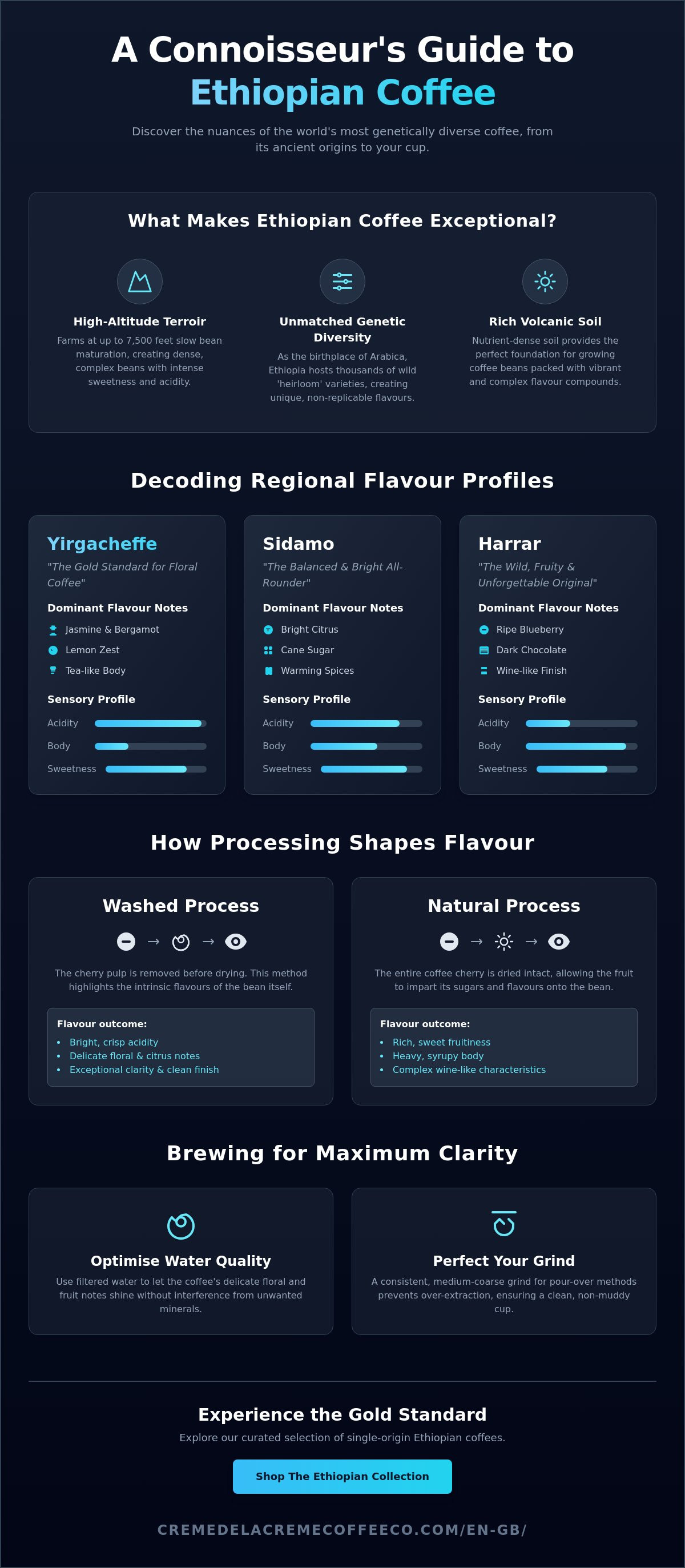
Ethiopia's coffee regions offer a diversity that rivals the world's finest wine appellations. Unlike other origins where flavors might blend together, ethiopian coffee regions remain fiercely distinct. This isn't just about geography; it's about a deep cultural bond where coffee is woven into the Ethiopian way of life. Understanding these regions helps you move past generic labels and find the specific profile that matches your morning ritual. Each area provides a unique sensory experience based on its specific microclimate and traditional processing methods.
The three most recognizable names you'll encounter are Sidamo, Yirgacheffe, and Harrar. Sidamo serves as the balanced all-rounder, frequently showcasing citrus and spice notes. Harrar represents the wild side of the spectrum. It's a sun-dried powerhouse known for a heavy body and unmistakable blueberry aromas. However, for those seeking the height of floral elegance, Yirgacheffe is often the starting point for their specialty journey.
Yirgacheffe: The Gold Standard for Floral Coffee
Yirgacheffe is frequently referred to as the "perfume" of the coffee world. It's famous for intense jasmine and lemon zest aromas that hit you the moment you open the bag. The body is light and tea-like, featuring a high, sparkling acidity that feels crisp on the palate. If you prefer elegant, refined beverages over heavy or syrupy ones, this is your gold standard. It's the ultimate choice for drinkers who value floral clarity and a clean finish above all else. We've captured these delicate nuances in our single-origin selection, The Ethiopian, which highlights this region's signature profile.
Sidamo and Guji: Complexity and Fruit-Forward Profiles
While Sidamo is the larger region known for reliable citrus notes, Guji has emerged as a high-demand specialty micro-region in recent years. Guji beans often display complex stone fruit profiles, specifically peach and apricot. These coffees offer a cleaner acidity than the wilder Harrar lots but provide more depth and sweetness than a standard Sidamo. They represent a perfect middle ground for those who enjoy a fruit-forward cup without the intense "funk" sometimes found in natural-processed beans. Choosing a Guji lot ensures a sophisticated balance of sweetness and acidity that works well across various brewing methods.
Identifying your preferred region is the first step toward a better coffee experience. Whether you crave the tea-like elegance of Yirgacheffe or the stone-fruit sweetness of Guji, understanding these regional boundaries ensures you never settle for a cup that doesn't suit your palate.
Washed vs. Natural Process: Choosing Your Preferred Flavor Profile
While the region defines the potential of the bean, processing determines the final character in your cup. It is the single most important factor for the "vibe" of your ethiopian coffee. In 2026, your choice usually comes down to two traditional methods, though modern techniques like anaerobic fermentation are quickly gaining ground in specialty lots. Understanding these methods allows you to predict exactly how a coffee will taste before you even boil the water. It turns a random purchase into a deliberate choice for your specific palate.
The Washed Process: For the "Tea-Like" Enthusiast
The washed, or wet, process involves removing the fruit from the seed almost immediately after harvest. This method relies on fermentation tanks and clean water to strip away the sticky mucilage. By removing the fruit early, the process highlights the bean's intrinsic acidity and delicate floral notes. It produces a cup characterized by "transparency," allowing the specific terroir of the farm to shine through without interference from the fruit’s sugars. The result is a crisp, elegant beverage with a light body.
This style is perfect for those who enjoy a clean mouthfeel and high clarity. It often mirrors the standards found in high-quality organic coffee beans, where purity of flavor is the primary goal. If you use a pour-over method like a V60 or Chemex, washed beans will reward you with a refined, tea-like experience. It's the ideal choice if you dislike "funky" or fermented aftertastes. You get a bright, sparkling cup that feels sophisticated and refreshing.
The Natural Process: For the "Fruit-Bomb" Lover
The natural process takes the opposite approach. Farmers dry the entire coffee cherry in the sun on raised beds. During this time, the seed remains encased in the fruit, slowly absorbing its sugars and organic compounds as it dries. This results in an ethiopian coffee with a heavy, jammy body and intense sweetness. It's famous for the "fruit-bomb" effect, where the coffee tastes remarkably like specific berries or tropical fruits. The process adds a layer of complexity that can feel wild and adventurous.
Expect iconic notes of sun-ripened blueberry, strawberry, and even dark chocolate. This method is best for those who want a low-acid cup with a rich, syrupy texture. While it requires meticulous care to avoid over-fermentation, a well-executed natural lot is a sensory powerhouse. It's a favorite for espresso drinkers who want their shots to taste like a liquid dessert. If you want your coffee to punch through milk or stand out as a bold, fruit-forward black coffee, the natural process is your best bet.
Looking ahead to the 2026 harvest, keep an eye out for anaerobic fermentation. This modern technique involves fermenting the beans in oxygen-free tanks. It creates wildly complex flavor profiles, often adding creamy textures or cinnamon-like spices to the traditional Ethiopian profile. Whether you choose a classic washed lot for its elegance or a natural for its boldness, understanding these methods ensures you buy with confidence every time.
Brewing for Clarity: How to Extract Floral and Fruity Notes
High-altitude Ethiopian beans are notoriously dense. This physical density means they resist giving up their flavors as easily as beans grown at lower elevations. To truly master ethiopian coffee, you need a brewing strategy that prioritizes high heat and precise agitation. If you treat these delicate beans the same way you treat a dark roast, you'll miss the very floral and fruity notes that make them famous. Success starts with understanding the relationship between bean density and thermal energy.
Water quality is your next priority. Soft water is essential because high mineral content can mute the delicate jasmine and citrus notes you've paid for. If your water is too hard, it acts like a blanket over the flavor. Aim for a temperature range between 94°C and 96°C. While darker roasts might turn bitter at these temperatures, light-roasted Ethiopian beans require this high heat to unlock their complex sugars and volatile aromatics. Without enough heat, your cup will taste underdeveloped and vegetal.
Grind size is your most powerful tool for control. Aim for a medium-fine consistency, similar to table salt. Because these beans are small and dense, they can easily cause "channeling." This happens when water finds a single path through the coffee bed instead of saturating everything evenly. Slow, circular pours help maintain a flat coffee bed and ensure every grain contributes to the final profile. Ready to test your technique? Explore our premium selection of The Ethiopian and start brewing for clarity today.
The Pour-Over Method: The Best Way to Experience Ethiopia
The V60 or Chemex remains the gold standard for highlighting the delicate top notes of ethiopian coffee. These methods use paper filters that trap oils and sediment, leaving you with a cup that is clean and vibrant. Start with a 1:16 brew ratio. For example, use 15 grams of coffee to 240 grams of water. This provides a balanced foundation that allows the tea-like body to shine. This approach is very different from selecting the best coffee beans for espresso, which typically favor darker roasts and higher pressure to create a syrupy mouthfeel.
Troubleshooting Common Extraction Issues
If your brew tastes sour, salty, or thin, you've likely under-extracted the beans. To fix this, grind finer or use hotter water to pull more flavor out of the dense structure. On the other hand, if the coffee tastes bitter, dry, or astringent, you've over-extracted. In this case, grind coarser or shorten your total brew time to dial back the intensity. Extraction yield is the percentage of coffee solids dissolved into the water. Balancing this yield is the secret to moving from a "good" cup to a professional-grade experience that captures every floral nuance.
Sourcing the Best: Why Crème de la Crème Coffee Co Ethiopian Coffee Stands Out
Finding the perfect ethiopian coffee requires more than just choosing a region. It demands a commitment to the entire supply chain. At Crème de la Crème Coffee Co, we treat these high-altitude beans with the respect their heritage deserves. Our process begins with direct trade principles. For the 2025/2026 harvest, coffee cherry prices in Ethiopia have surged to 220–250 ETB/kg. We embrace these rising costs to ensure farmers are compensated fairly for the labor-intensive heirloom quality we demand. Despite a record production forecast of 7.8 million bags for the season, we prioritize the top 1% of the harvest to maintain our premium standards.
Roasting is where the magic happens. Commercial roasters often use large batches that can scorch delicate beans and mute their character. We take a different path. Our small-batch roasting method allows us to monitor every second of the development phase. This precision is vital for preserving volatile floral aromatics that can easily dissipate under high heat. We don't just roast coffee; we curate a sensory experience that honors the work of the Ethiopian producers. Every bag reflects the meticulous attention to detail at Crème de la Crème Coffee Co.
The Ethiopian: Our Signature Single-Origin Profile
Our current lot of The Ethiopian highlights the classic elegance of the Yirgacheffe region. You'll notice distinct flavor notes of Earl Grey tea and Bergamot, supported by a crisp lemon zest finish. We've developed a light-medium roast profile specifically to balance sparkling acidity with a gentle sweetness. This makes the bean incredibly versatile. It shines as a delicate hot pour-over, yet it remains vibrant and refreshing when prepared as an iced coffee. It is the definitive choice for those who want to experience the "perfume" of specialty coffee in its purest form.
Freshness and Delivery Nationwide
High-altitude beans lose their complexity quickly if they aren't handled correctly after roasting. To combat this, Crème de la Crème Coffee Co uses a strict roast-to-order model. Your ethiopian coffee isn't sitting on a shelf for weeks. It's roasted, packaged in our specialized freshness-preserving bags, and shipped directly to your door. Our packaging uses one-way degas valves and protective barriers to block oxygen and light during transit. Consistency is the hallmark of a great ritual. By choosing a Coffee Subscription, you ensure that your favorite beans are always in your pantry. Experience the floral elegance of The Ethiopian today and elevate your daily routine with a cup that defines specialty quality.
Elevate Your Daily Ritual with the Birthplace of Coffee
You now have the tools to navigate the complex landscape of ethiopian coffee with confidence. By identifying the distinct profiles of regions like Yirgacheffe and understanding how processing impacts flavor, you can move past generic labels. Brewing for floral clarity requires precision in temperature and water quality. These steps ensure you unlock the full potential of dense, high-altitude beans in every cup. It's no longer about guesswork; it's about a curated sensory experience.
We are dedicated to bringing you the finest directly sourced heirloom varieties from the 2026 harvest. Our small-batch roasting process ensures every delicate note is preserved for your morning ritual. Shop The Ethiopian: Freshly Roasted Specialty Beans and enjoy free shipping on all subscription orders. It's time to stop settling for average beans and start experiencing the gold standard of specialty coffee. Your perfect morning is just one brew away.
Frequently Asked Questions
Is Ethiopian coffee always light roast?
No, it isn't always light-roasted, though this is the most common choice for specialty lots. Roasters choose light to medium profiles to preserve the delicate floral and citrus notes that define the origin. While you can find darker roasts, they often obscure the unique terroir that makes these beans so valuable to connoisseurs. We roast our ethiopian coffee to a precise light-medium level to ensure a perfect balance of sweetness and acidity.
What is the best way to brew Ethiopian Yirgacheffe?
The pour-over method is the superior way to experience this specific region. Using a V60 or Chemex allows the paper filter to trap oils, resulting in a clean cup that highlights jasmine and lemon zest aromas. Aim for a 1:16 coffee-to-water ratio and use water heated to 94°C. This high temperature is necessary to penetrate the dense structure of these high-altitude beans and extract their complex sugars effectively.
Does Ethiopian coffee have more caffeine than other origins?
Caffeine levels in these beans are generally comparable to other Arabica varieties. Caffeine content is primarily determined by the coffee species rather than the specific country of origin. Because Ethiopia almost exclusively produces Arabica, which has about half the caffeine of Robusta, you can expect a standard energy boost. The perceived intensity of the coffee usually comes from its high acidity and vibrant flavor profile rather than an increased caffeine count.
Why does my Ethiopian coffee taste like tea?
A tea-like profile is a prized characteristic of washed ethiopian coffee from regions like Yirgacheffe. This happens because the wet-processing method removes the fruit early, leaving behind a light body and high floral clarity. These beans often exhibit notes of Earl Grey, bergamot, or jasmine. If your cup tastes like tea, it's a sign of a high-quality, well-extracted brew that successfully captures the elegant "perfume" of the heirloom variety.
Can I use Ethiopian coffee beans for espresso?
You can certainly use these beans for espresso, especially if they are natural-processed. Natural lots provide the heavy body and jammy sweetness needed to balance the intensity of an espresso shot. While a washed Yirgacheffe might taste too sharp or acidic as a straight shot, a natural Sidamo or Guji creates a vibrant, fruit-forward experience. These beans are excellent for those who want their lattes to have a distinct berry-like sweetness.
What is the difference between Sidamo and Yirgacheffe coffee?
The main differences lie in geography and flavor intensity. Sidamo is a large, high-altitude region that produces a wide range of balanced, citrus-toned coffees. Yirgacheffe is a smaller sub-region within Sidamo that has become famous for its specific, intense floral aromas and tea-like body. While Sidamo is a versatile all-rounder, Yirgacheffe is considered the gold standard for those who specifically crave jasmine and lemon-heavy profiles with a lighter mouthfeel.
Are Ethiopian coffee beans organic?
Many are grown using traditional, naturally organic methods, but formal certification varies by lot. Most smallholder farmers in Ethiopia don't use synthetic fertilizers or pesticides because of the cost and traditional farming culture. While many of these coffees meet organic standards in practice, only those with the official seal on the bag have been through the rigorous certification process. You should check the specific product details to confirm the organic status of a particular harvest.
What does "Natural Process" mean on an Ethiopian coffee bag?
The natural process means the coffee was sun-dried with the fruit still attached to the bean. This allows the seed to absorb the natural sugars and organic compounds from the coffee cherry as it dries on raised beds. This method results in a cup with a much heavier body and lower acidity than washed coffees. It's the reason for those iconic "fruit-bomb" flavors like wild blueberry and strawberry that many enthusiasts love.