

Organic Coffee Beans: The Ultimate Guide to Specialty Quality and Flavour
The most vibrant flavours in your morning cup don't actually start in the roaster. They begin deep within the nutrient-rich soil of a chemical-free farm. You might have noticed that many organic coffee beans found on supermarket shelves often lack the punchy, complex notes you expect from a premium brew. It's a common frustration for those trying to shop more ethically. You want a cleaner, healthier drink; however, you shouldn't have to sacrifice the sensory experience of a speciality roast to achieve that.
We understand the confusion surrounding certification labels and the valid concern that conventional crops carry unwanted pesticides. It often feels like a trade-off between your wellbeing and your taste buds. This guide simplifies the journey from farm to filter. You'll discover why organic speciality coffee offers a deeper flavour profile and how healthy soil directly impacts the quality of your daily brew. We'll show you how to identify genuine organic quality and where to find a reliable UK supplier for fresh, vibrant beans that support a healthier planet.
Key Takeaways
- Learn how chemical-free soil and slower maturation develop the dense, complex flavour profiles found in speciality harvests.
- Discover how choosing organic coffee beans helps protect local water sources and supports biodiversity amongst delicate ecosystems.
- Identify the specific UK certification labels and "Roasted On" dates required to ensure you are buying genuine, fresh quality.
- Understand why opting for whole bean coffee is essential for preserving the vibrant aromatics and natural sweetness of your brew.
- Find out why high-altitude harvests, such as The Colombian, deliver a more refined and balanced sensory experience for your daily ritual.
What are Organic Coffee Beans and Why Do They Matter?
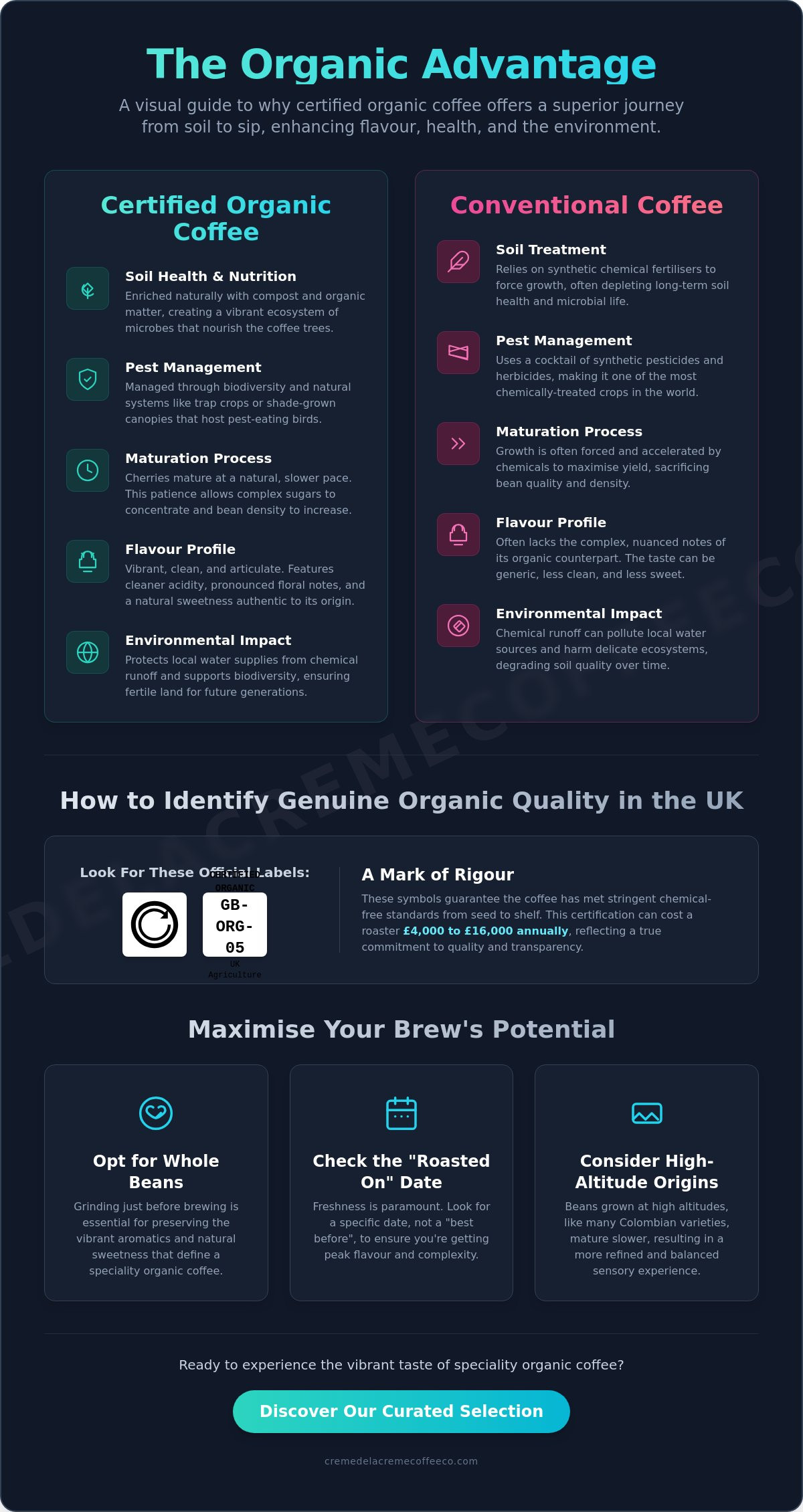
At its most basic level, what is organic coffee refers to beans grown without the use of synthetic fertilisers, herbicides, or pesticides. This approach treats the coffee farm as a living ecosystem rather than just a production line. In the UK, this isn't just a marketing claim; it's a strictly regulated standard. When you choose organic coffee beans, you're supporting a system that prioritises soil health and environmental balance over high-speed chemical yields.
The "organic" label represents a profound commitment to agricultural sustainability. Conventional coffee is one of the most chemically treated crops in the world. By removing these toxins, farmers protect local water supplies and ensure the land remains fertile for generations. It’s a slower, more deliberate way of farming. This patience pays dividends in the cup. Healthy soil produces a more nutrient-dense coffee cherry, which is the foundation of the speciality flavours we celebrate. However, it's vital to distinguish between "certified organic" and "naturally grown" coffee. Many producers claim to be natural, but without the rigour of official certification, there’s no guarantee that prohibited substances haven't been used.
The Core Principles of Organic Coffee Farming
Organic speciality farmers don't just stop using chemicals; they replace them with sophisticated natural systems. Instead of synthetic fertilisers, they use compost and organic matter to enrich the earth. This creates a vibrant underground network of microbes that feed the coffee trees. Pest control is managed through biodiversity. Farmers often introduce natural predators or use trap crops to keep insects away from the precious cherries. You'll also find that organic practices frequently overlap with shade-grown techniques. By growing coffee under a canopy of native trees, farmers provide a habitat for birds that eat pests, whilst the falling leaves act as a natural mulch. It’s a circular, self-sustaining method that creates a superior bean.
Certification: Decoding the Labels
In the United Kingdom, look for the Soil Association leaf or the GB-ORG logo on your packaging. These symbols prove the product has met stringent requirements from seed to shelf. Maintaining this certification is no small feat. For a medium-sized roaster, the annual cost of organic certification can range from approximately £4,000 to £16,000. This investment covers regular inspections, detailed record-keeping, and strict separation of organic and conventional beans during roasting. Some small-scale speciality farms actually follow organic principles to the letter but cannot afford the formal certification fees. Whilst their coffee is excellent, the official label remains the only way for you to be 100% certain of the bean's chemical-free journey. It provides the transparency and peace of mind that many modern drinkers now demand.
The Flavour Advantage: Does Organic Coffee Taste Better?
Choosing high-quality organic coffee beans isn't just about what's missing from the crop; it's about what the soil adds. Many drinkers assume organic coffee is "weaker" or less punchy than conventional roasts. This is a myth. In reality, organic farming often produces a more vibrant and articulate cup. Because organic farmers don't use chemical fertilisers to force rapid growth, the coffee cherries mature at a natural, slower pace. This patience allows the sugars to concentrate and the bean density to increase. A denser bean is a more flavourful bean, holding onto its complex aromatics far better during the roasting process.
The biodiversity found on organic estates also plays a critical role in developing unique terroir notes. When coffee trees grow amongst native fruit trees and diverse vegetation, the soil becomes a rich tapestry of nutrients. This variety translates directly into the cup. You'll find cleaner acidity, more pronounced floral notes, and a natural sweetness that conventional crops often lack. It’s the difference between a mass-produced fruit and one grown in a well-tended garden. The flavour is simply more authentic to its origin.
Soil Health and Nutrient Density
The secret to a superior brew lies beneath the surface. In organic systems, mycorrhizal fungi form a symbiotic relationship with coffee root systems, helping the plant absorb essential minerals more efficiently. This natural boost preserves the delicate organic acids that speciality drinkers love, such as citric and malic acids. Scientific studies on organic coffee's health benefits also highlight a higher concentration of phenolic compounds, which contribute to the bean's antioxidant properties and its flavour depth. Soil microbes directly influence the synthesis of aromatic compounds in Arabica beans, creating the nuanced sensory profile that defines premium coffee.
Specialty Grade vs. Organic: Finding the Sweet Spot
It's vital to remember that "organic" refers to how the coffee is grown, whilst "Specialty" refers to the quality of the final product. To be classed as speciality, a coffee must score 80 points or higher on a 100-point scale. Finding beans that are both certified organic and speciality grade is surprisingly rare. It requires a meticulous farmer who cares as much about the environment as they do about the precise moisture content and sorting of the harvest. Crème de la Crème Coffee Co focuses on this rare intersection to ensure your morning ritual is both ethical and exceptional. If you're looking for a perfect example of this balance, our The Colombian offers a refined organic profile with stunning nutty undertones.
Environmental and Health Benefits of Choosing Organic
The impact of your morning brew extends far beyond the kitchen counter. When you opt for organic coffee beans, you're directly influencing the health of fragile ecosystems in the global south. Conventional coffee production often relies on synthetic fertilisers that leach into local waterways, affecting both wildlife and the communities downstream. Organic estates act as vital buffers. By avoiding these chemicals, farmers protect the purity of their water sources and encourage a thriving level of biodiversity. These farms often become sanctuaries for migratory birds and essential pollinators, creating a resilient landscape that feels alive rather than sterile.
There is also a significant human element to this choice. The farmers and seasonal pickers who handle the crops are the first to be affected by chemical exposure. Organic farming removes this burden, ensuring a safer working environment for the people behind your favourite roast. This commitment to safety and ecological balance is a core part of what the National Coffee Association on organic standards highlights as a defining factor of the movement. It's about creating a transparent, ethical chain that respects every hand involved in the process.
In the UK, there's growing discussion around "clean" coffee, specifically concerning mycotoxins and mould. Whilst some marketing can be alarmist, the truth is simpler. Organic speciality beans are typically grown at higher altitudes where mould is less likely to thrive. Because these beans are processed with such high levels of scrutiny, the risk of contamination is naturally minimised. You don't need a "mould-free" label to find clean coffee; you simply need a speciality roaster who prioritises fresh, organic harvests.
Sustainability for Future Generations
Many organic producers are now moving towards regenerative agriculture. This goes a step further than just avoiding chemicals; it actively works to restore the land. By using cover crops and natural mulch, farmers increase the soil's ability to sequester carbon and retain moisture. This makes the coffee plants much more resilient to the stressors of climate change, such as unexpected droughts or heatwaves. You'll often find that these environmental efforts go hand-in-hand with Fairtrade social standards, ensuring that ecological care is matched by fair wages and community investment.
The Health Perspective: What is in Your Cup?
A common question is whether pesticide residues survive the intense heat of the roasting process. Whilst high temperatures do break down many compounds, choosing organic coffee beans ensures those chemicals were never there to begin with. This purity allows the bean's natural profile to shine. Studies suggest that organic beans often contain higher levels of antioxidants compared to conventional ones, largely due to the plant's natural defence mechanisms in a chemical-free environment. When you combine organic certification with a fresh, local roast, you're getting the ultimate choice for both flavour and wellness.
Buying and Brewing Your Organic Coffee Beans
Securing the finest organic coffee beans is only half the battle. To truly experience the vibrant acidity and clean finish we've discussed, you must handle them with care at home. Freshness is your priority. Always check the packaging for a "Roasted On" date. Conventional supermarket brands often rely on "Best Before" dates, which can hide months of stale storage. Speciality coffee peaks between seven and thirty days after roasting. During this window, the aromatics are at their most potent and the flavours are fully developed.
We always recommend buying whole beans rather than pre-ground. Once coffee is ground, the increased surface area leads to rapid oxidation. You'll lose those delicate organic notes in minutes. Invest in a decent burr grinder and grind just before you brew. Proper storage is equally vital. Keep your beans in an airtight container, away from direct sunlight, heat, and moisture. A cool, dark cupboard is perfect. Never store your coffee in the fridge, as the beans will absorb kitchen odours and moisture, ruining the refined profile of a premium harvest.
How to Read a Speciality Coffee Label
A quality label tells a story. Look for the specific farm or estate name and the altitude, usually measured in metres above sea level (MASL). High-altitude beans develop more slowly and offer superior clarity. You'll also see the processing method, such as "Washed" or "Natural," which dictates the base flavour profile. Ignore the marketing adjectives and focus on the listed flavour notes. These aren't added ingredients; they are a guide to the natural characteristics of the bean. If you want to ensure a constant supply of peak-freshness coffee, our Coffee Subscription delivers curated roasts directly to your door.
Brewing Tips for Maximum Clarity
The purity of your water is as important as the beans themselves. Use filtered water to remove chlorine and heavy minerals that can mask the delicate character of an organic single-origin. For methods like the V60 or Aeropress, grind consistency is paramount. A coarse, uneven grind leads to sour, under-extracted coffee, whilst too fine a grind becomes bitter. For light-to-medium organic coffee beans, aim for a water temperature between 92°C and 94°C to extract the full spectrum of sweetness without scorching the beans. This precision ensures that the hard work of the organic farmer is fully realised in your cup.
Discover Crème de la Crème Coffee Co’s Curated Organic Selection
Sourcing organic coffee beans that meet our strict speciality criteria requires a discerning eye. At Crème de la Crème Coffee Co, we select only the finest high-altitude harvests that demonstrate clear traceability and ethical integrity. Our collection is designed for the conscious drinker who refuses to compromise on taste. We believe that a truly great cup of coffee should be as kind to the earth as it is to your palate.
Our range features distinct profiles to suit every preference. The Colombian is a staple for those who enjoy a balanced, reliable brew. It offers comforting nutty undertones and a smooth finish that makes it a favourite for morning rituals. For the more adventurous drinker, The Ethiopian provides a vibrant alternative. It’s a roast defined by delicate floral notes and a bright citrus acidity that reflects the unique terroir of its high-elevation origin. These selections represent the pinnacle of what chemical-free farming can achieve.
From Farm to Your Front Door
The journey of our beans concludes in our UK roastery, where we employ a meticulous small-batch process. This approach allows us to maintain absolute quality control over every roast. We adjust our profiles to highlight the natural characteristics of the organic crop, ensuring the terroir isn't lost to the heat. Our national delivery service ensures that the roastery experience is accessible across the country. By shipping quickly after roasting, we guarantee that you receive your coffee at its peak potential for flavour and aroma.
Join the Crème de la Crème Coffee Co Community
Consistency is the hallmark of a great coffee habit. Our Coffee Subscription service removes the friction from your morning routine. You can choose the frequency that suits your lifestyle, ensuring a fresh supply is always on hand. This flexibility allows you to explore our various origins whilst supporting sustainable farming amongst our global partners. We are proud to work with estates that share our vision for a transparent and ethical industry. To start your own journey into speciality quality, Explore our range of specialty organic coffee beans and experience the difference of a curated roast.
Elevate Your Daily Ritual with Purpose
Choosing organic coffee beans is a decision that respects your health, the environment, and the incredible craft of the producer. You now understand how chemical-free soil and high-altitude growth create a more complex, vibrant cup that conventional crops simply cannot match. By prioritising "Roasted On" dates and whole bean quality, you ensure that these delicate, natural aromatics actually reach your morning filter. It’s a simple shift that transforms a routine habit into a premium sensory experience whilst supporting a healthier planet.
We take pride in our meticulous small-batch roasting process right here in the UK. Every selection is sourced from elite, high-altitude speciality farms to guarantee the clarity, density, and sweetness you expect from a boutique roaster. With our nationwide delivery, you get the roastery experience delivered directly to your door with freshness guaranteed. It's time to stop settling for inconsistent supermarket brands and start enjoying coffee that truly rewards your palate.
Browse our specialty organic coffee beans and start your subscription today. Your best cup of coffee is just one ethical choice away. We look forward to being part of your morning.
Frequently Asked Questions
Are organic coffee beans better for you than regular coffee?
Organic coffee is generally considered a healthier choice because it's grown without synthetic pesticides, herbicides, or fertilisers. These chemicals can leave trace residues on conventional crops, which you then consume in your daily brew. Additionally, organic plants often produce more antioxidants as a natural defence mechanism. This results in a cleaner, more nutrient-dense cup that supports your wellbeing without the chemical burden of mass-produced alternatives.
Does organic coffee have more caffeine than conventional coffee?
Organic status does not influence the caffeine levels in your brew. Caffeine content is primarily determined by the coffee species, such as Arabica or Robusta, and the specific variety of the plant. For example, a conventional Robusta bean will always have more caffeine than an organic Arabica bean. If you're looking for a specific energy boost, focus on the bean's origin and variety rather than its organic certification.
Why is organic coffee usually more expensive?
The higher price reflects the intensive labour and strict standards required for chemical-free farming. Organic farmers often face lower crop yields because they don't use synthetic growth stimulants to force production. They also pay significant annual fees for certifications like the Soil Association leaf. These costs, combined with the meticulous care needed to achieve speciality quality, ensure a premium product that fairly compensates the producer for their sustainable practices.
How can I tell if my coffee is truly organic?
Genuine organic coffee beans always display an official certification logo and a specific control body code on the label. In the UK, you should look for the Soil Association leaf or the GB-ORG code. These markers prove that every step of the supply chain has been audited. If a brand uses vague terms like "pesticide-free" without these symbols, they haven't undergone the legal verification required to prove their claims.
Can I buy organic coffee beans that are also Fairtrade?
You can certainly find beans that carry both organic and Fairtrade certifications. Many speciality farms prioritise both environmental health and social equity. Whilst organic focuses on the agricultural methods, Fairtrade ensures that farmers receive a fair price and work in safe conditions. Choosing a dual-certified coffee is a powerful way to support a more ethical and sustainable global supply chain whilst enjoying a superior flavour profile.
Does the roasting process kill pesticides in non-organic coffee?
Roasting at high temperatures reduces some surface residues, but it doesn't remove systemic chemicals that the plant absorbed during growth. These substances can remain within the cellular structure of the bean. Beyond your own health, the conventional farming process has already impacted the health of the soil and local wildlife. Organic certification is the only way to ensure those chemicals were never part of the agricultural cycle in the first place.
What is the best way to store organic coffee beans?
The best storage solution is an opaque, airtight canister with a one-way valve, kept in a room-temperature cupboard. This valve allows carbon dioxide to escape whilst preventing oxygen from entering. Avoid glass jars unless they are kept in complete darkness, as light quickly degrades the bean's oils. Never use the fridge, as the porous structure of the bean will absorb moisture and kitchen odours, destroying the delicate aromatics.
Are all specialty coffee beans organic?
No, "speciality" is a grade of quality, not a farming method. A coffee earns its speciality title by scoring 80 points or higher during an independent sensory evaluation. Whilst many speciality farmers use organic methods, the cost of formal certification is often prohibitive for smaller estates. We focus on organic coffee beans that have also achieved this elite speciality status, ensuring you get the best of both worlds in every cup.